GCCs Turn to Fractional Hiring in India: What Senior Professionals Need to Know in 2026


India's Global Capability Centers are no longer just adding headcount. They are adding precision.
After adding over 2 lakh net employees in FY26 and growing to 2,117 centers worth $98.4 billion in revenue, GCCs are entering a new phase. The headline trend? Fractional hiring for senior leadership.
For senior professionals with 8-15 years of experience, this creates a completely new career path.
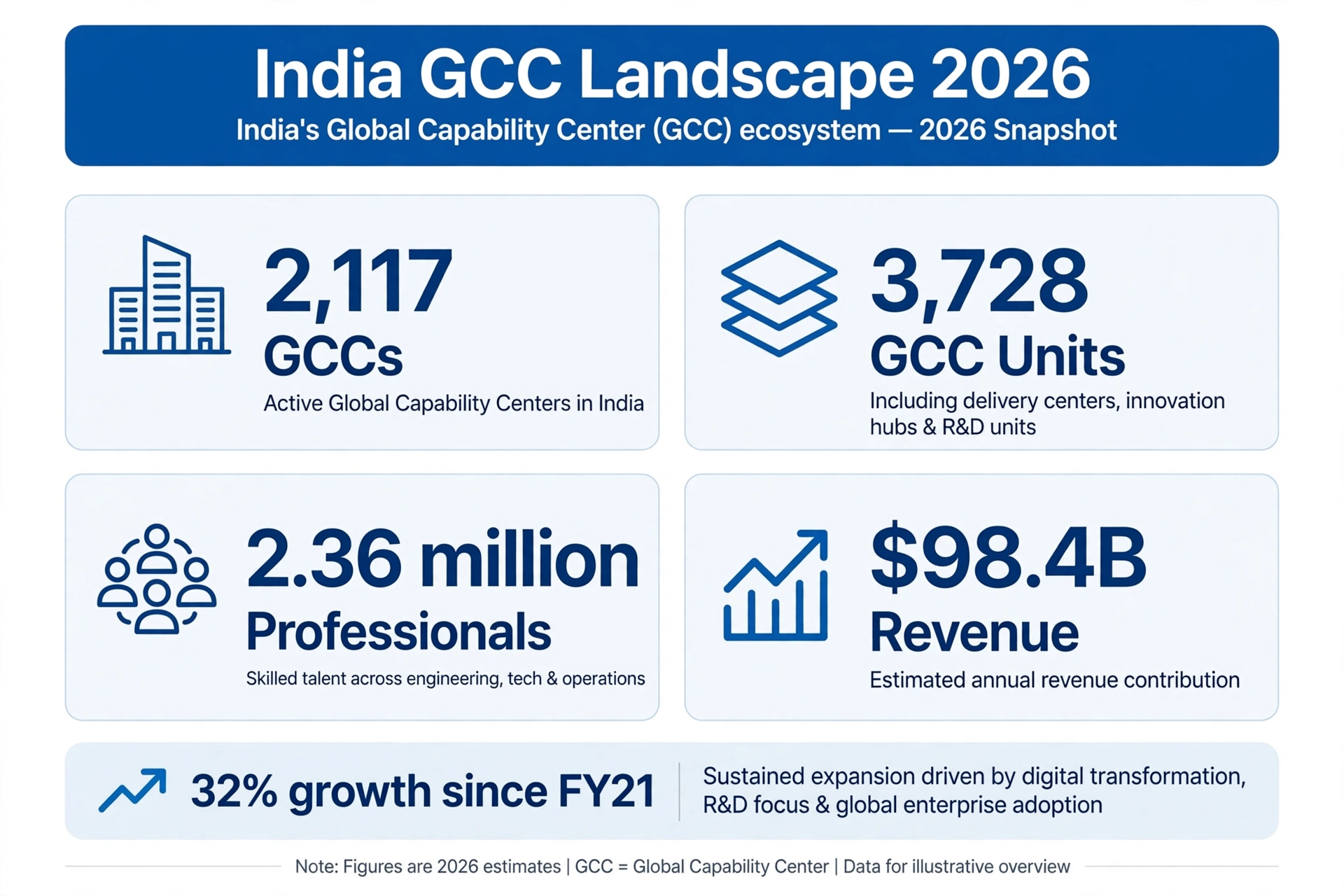
Source: Nasscom-Zinnov India GCC Landscape Report 2026 - Data as of March 2026
The Big Shift: What LinkedIn's Story Reported
In September 2026, LinkedIn News highlighted that mid-market GCCs are turning to part-time and fractional CXOs for leadership roles.
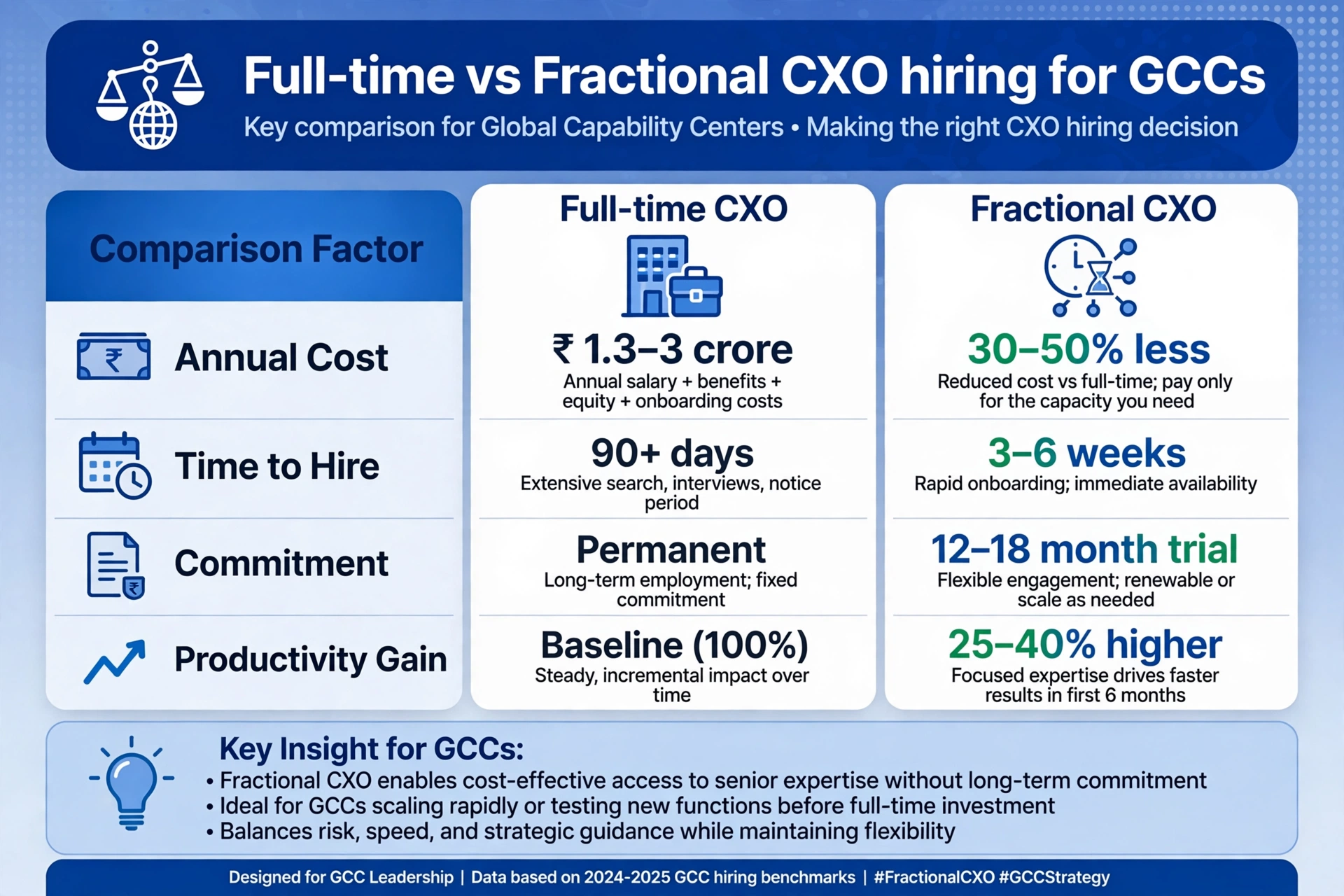
Hiring platform Instahyre confirmed fractional hiring has become "the fastest-moving trend" among mid-market GCCs. Why? A full-time India Head now costs ₹40-60 lakh per year, while senior functional heads and GCC heads command ₹60 lakh to ₹3 crore annually.
There are 480 mid-market GCCs in India today - accounting for 27% of the entire GCC landscape - with another 120 expected by December 2026. For these companies, full-time CXO costs are significant pre-revenue burn.
Why GCCs Prefer Fractional Over Full-Time
1. The Salary Math
Traditional GCC leadership hiring in 2026 looks like this:
India Head / Site Lead: ₹40-60 LPA
Senior Functional / Director: ₹60 lakh - ₹1.2 crore
GCC Head / Country Head / AI Leader: ₹1.3-3 crore
Fractional leaders deliver the same expertise at 30-50% lower cost, with no equity, benefits, or long-term severance overhead.
2. The Talent Gap
42% of GCC roles are 0-3 year hires, but talent in the 8-15 year cohort remains scarce. 72% of GCC leaders cite this as their top talent concern. The AI/ML supply-demand gap is 3x nationally and 4x for senior roles, with time-to-hire exceeding 90 days.
Fractional CXO demand grew 68% annually in FY24, with 25%+ CAGR projected since then.
3. The Notice Period Problem
Companies are hiring faster than ever, but candidates are taking longer to join.
According to Careernet data:
Time-to-offer fell from 53 days in FY25 to 46 days in FY26
But average time from accepting an offer to joining remains 30-33 days
29-31% of hires still take 60+ days to join
For GCCs, the wait is longest: 41-42 days vs 27-28 days for non-GCCs
Fractional leaders, often independent, can join in 3-6 weeks and bypass 90-day notice periods entirely.
How the Fractional GCC Model Works
"The India leader is the highest-stakes hire of a setup, made before anyone knows what the centre will become. A fractional leadership model defers that by 12-18 months without leaving the centre unled. It converts a hiring bet into a trial, with many fractional leaders moving to permanent roles." - Neeti Sharma, CEO, TeamLease Digital
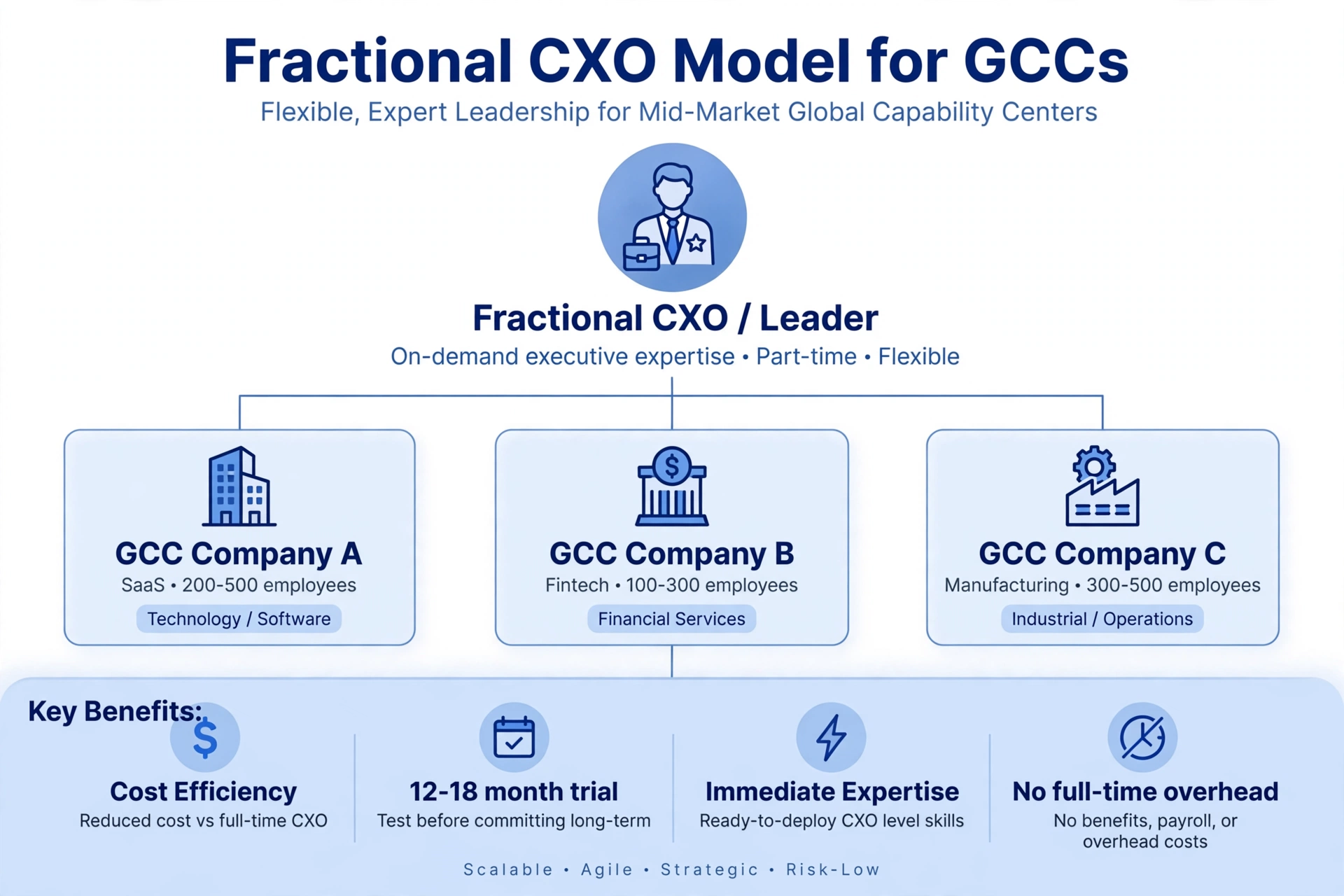
Common fractional roles in GCCs:
Fractional Country Head / Site Leader
Fractional CTO / Head of Engineering
Fractional CHRO / Talent Strategy Lead
Fractional CFO for entity setup & compliance
Fractional COO / GCC Chief of Staff
Fractional GCC Advisor (setup, compliance, vendor selection)
Top fractional functions globally are Finance (22%), Marketing (20%), and Engineering (17%).
Is Fractional Right for Every GCC?
Not quite. Enterprise GCCs still need dedicated leadership.
"While fractional or advisory CXO models offer tactical agility for niche projects, enterprise GCCs require dedicated, full-time site leadership. Strategic capabilities such as enterprise architecture, AI governance, data security and talent strategy cannot be managed on a part-time basis." - Ritu Rakhra, Head of HR, Broadridge India
The emerging playbook:
Months 0-18: Fractional for entity setup, compliance, initial talent build, governance design
Month 18+: Convert to full-time for long-term strategy, architecture, and talent ownership
Many fractional leaders do convert to permanent roles, creating a new pipeline that didn't exist two years ago.
What This Means for You as a Job Seeker
If you are a mid-to-senior professional (5-15 years), this is a major opportunity.
You are a fit for fractional GCC roles if you:
Have led GCC setup, scale-up, or global delivery before
Have expertise in AI, Cloud, Cybersecurity, Data, or Platform Engineering
Are between roles, consulting, or looking for portfolio career
Want flexibility without losing strategic impact
Can work across 2-3 companies part-time
On average, a fractional CXO in India earns ₹80 lakh to ₹1.20 crore per annum with multi-company exposure, continuous learning, and stronger peer goodwill.
Skills that GCCs are paying a premium for in 2026:
AI/ML Leadership, GenAI, Platform Engineering
Domain + Tech: Credit Risk + AI underwriting, Compliance + RegTech, Fraud + AI/ML
GCC Setup: Entity incorporation, compliance, talent strategy
Ready to explore?
Search thousands of fresh roles, build and review a resume recruiters actually read, and get matched faster.
Explore Jobs at Vertices | Build Professional Resume | Free Resume Review | Resume Tailoring
Sources: The Hindu BusinessLine, Nasscom-Zinnov India GCC Landscape Report 2026, Careernet, TeamLease Digital, Livemint. Data as of FY26 (March 2026).
This article was produced by Vertices Career Intelligence team, tracking India's GCC hiring trends.
Vertices Team
Careers are changing. We analyze the trends, decode hiring, and help you stay ahead.
Enjoyed this article?
Vertices helps you discover relevant jobs, analyze your resume, and make better career decisions using AI.